Pardoned crypto tycoon gives £20mn to UK maths and physics institute
Financial Times, 3 Mar 2026
The entrepreneur Ben Delo has pledged £20m towards the London Institute's £60m endowment campaign, reports the science editor of the FT.
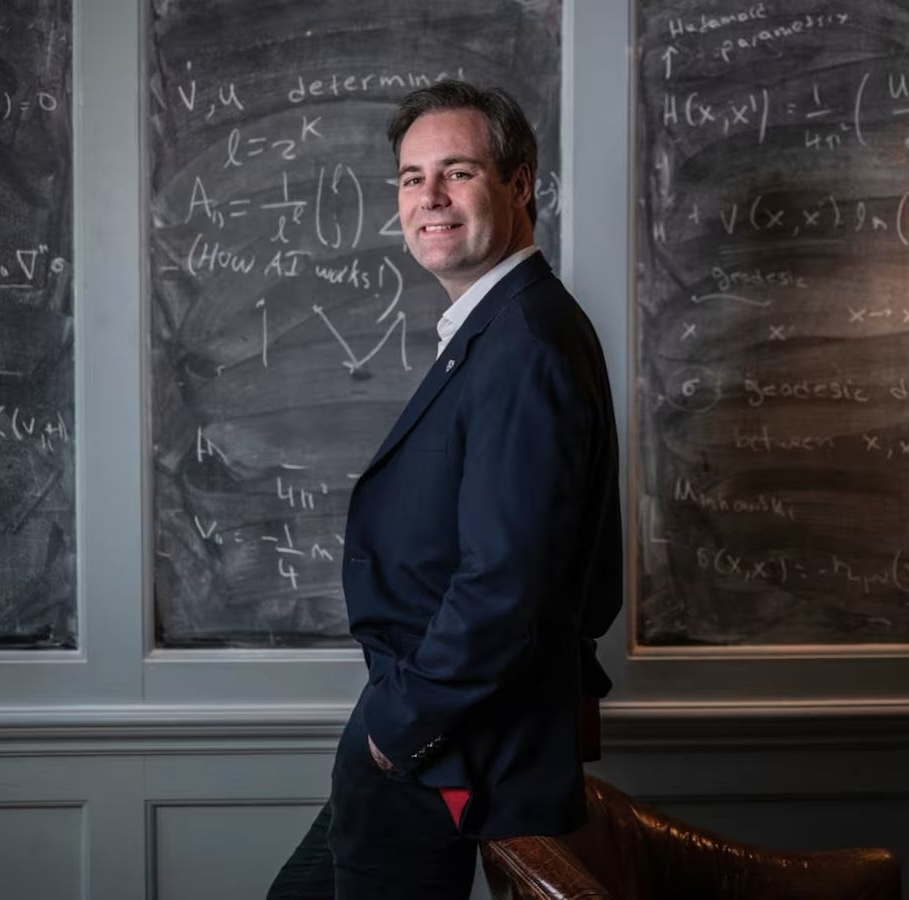
A billionaire cryptocurrency entrepreneur pardoned by President Donald Trump after breaking US bank secrecy law has pledged up to £20m to a private London institute that aims to become a world-class theoretical maths and physics research centre.
Ben Delo has made an initial donation of £10mn plus a promise for a further £10m in matched funding towards the London Institute for Mathematical Sciences’ (LIMS) goal of securing a £60m endowment.
LIMS is pushing to attract top international researchers as US scientists battle public funding cuts and UK physicists fight government plans to curb research costs.
“LIMS is a very, very important place that focuses on... independent research without the constraints of administration and teaching and bureaucracy,” said Delo, who has vowed to give at least half his total wealth to worthy causes. “I’ve founded a company and I’ve grown it—and I recognise the same entrepreneurial spirit here at LIMS.”
Delo, a Briton who studied maths and computer science, made his fortune through co-founding the cryptocurrency exchange BitMex.
Delo and his two co-founders were fined $10m each after pleading guilty in 2022 to violating the US Bank Secrecy Act by failing to establish, implement and maintain an anti-money laundering programme. Trump pardoned the trio last year, with Delo arguing that they had been “wrongfully targeted” via an “obscure, antiquated law”.
Delo has donated to organisations in fields such as neurodiversity, Commonwealth collaboration and public debate, including freedom of expression NGO Index on Censorship and the Free Speech Union founded by the right-wing commentator and journalist Lord Toby Young.
Thomas Fink, LIMS’ founding director, said the institute felt comfortable accepting Delo’s money even before the presidential pardon. Delo’s case was in a “grey area” and showed how legislation was not always keeping up with new technologies, Fink added.
Fink said the tech sector more broadly seemed “more interested” in funding LIMS “than we would have imagined”, perhaps because “transformative technologies” originated in a “well of scientific principles”.
“One of the things we think about a lot is how do you safeguard basic science—curiosity-driven research,” Fink said. “I’m a big defender of universities, but it certainly shouldn’t be the only model. We need new models for knowledge creation.”
LIMS, which was officially recognised as an independent research organisation in 2018, already occupies a distinctive place in UK science. It is based in rooms at the 227-year-old Royal Institution in London’s Mayfair that were once home to celebrated figures including the physicist Michael Faraday and the chemist Sir Humphry Davy.
LIMS gives its theorists licence to “pursue the most intriguing patterns” with a view to making “profound discoveries” in areas such as quantum field theory and string theory. Delo already funds a fellowship held by Juven Wang, a former Harvard researcher with interests including quantum computation and the composition of dark matter.
Other LIMS donors include Mikhail Khodorkovsky, the former Yukos oil tycoon who was once Russia’s richest man and is now a prominent critic of President Vladimir Putin from exile. LIMS used his funding to create fellowships for theorists from Russia and Ukraine after Putin launched his full-scale invasion of Ukraine in 2022.
Michael Peel is the science editor of the Financial Times.