Entanglement as an organising principle of quantum matter
4:30PM, 4 Mar 2026
Frank Verstraete shows how tensor networks harness entanglement to simulate strongly correlated quantum matter and reveal hidden symmetries.
A century after the Austrian theoretical physicist Erwin Schrödinger published his famous quantum wave equation, the exponential complexity of quantum many-body systems remains one of the central challenges of physics. In this lecture, Prof. Frank Verstraete presents how entanglement theory breaks this impasse through the development of tensor networks. He explains how these methods provide a powerful framework for efficiently representing and simulating strongly correlated matter, turning seemingly intractable problems into structured, computable ones.
Prof. Verstraete also demonstrates how such tensor networks reveal the organising role of quantum entanglement and make it possible to uncover emergent and generalised symmetries. These symmetries, in turn, define and classify quantum phases of matter. By combining conceptual insight with computational power, he argues that tensor networks now form an essential toolkit for understanding complex quantum systems.
Event information
This event takes place at 4:30pm on Wednesday 4 March in the Faraday seminar room of the London Institute for Mathematical Sciences, on the second floor of the Royal Institution. Afterwards, there are drinks with the speaker in the Old Post room. LIMS colloquia are sponsored by Cognia.
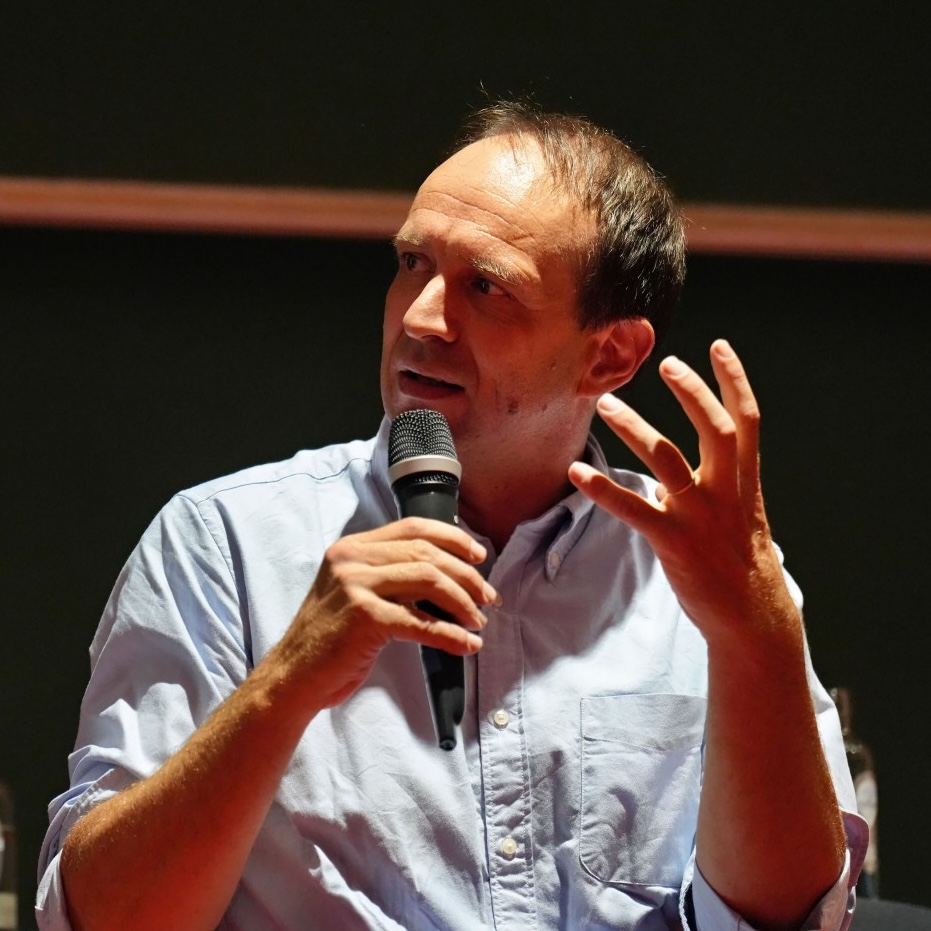
Speaker
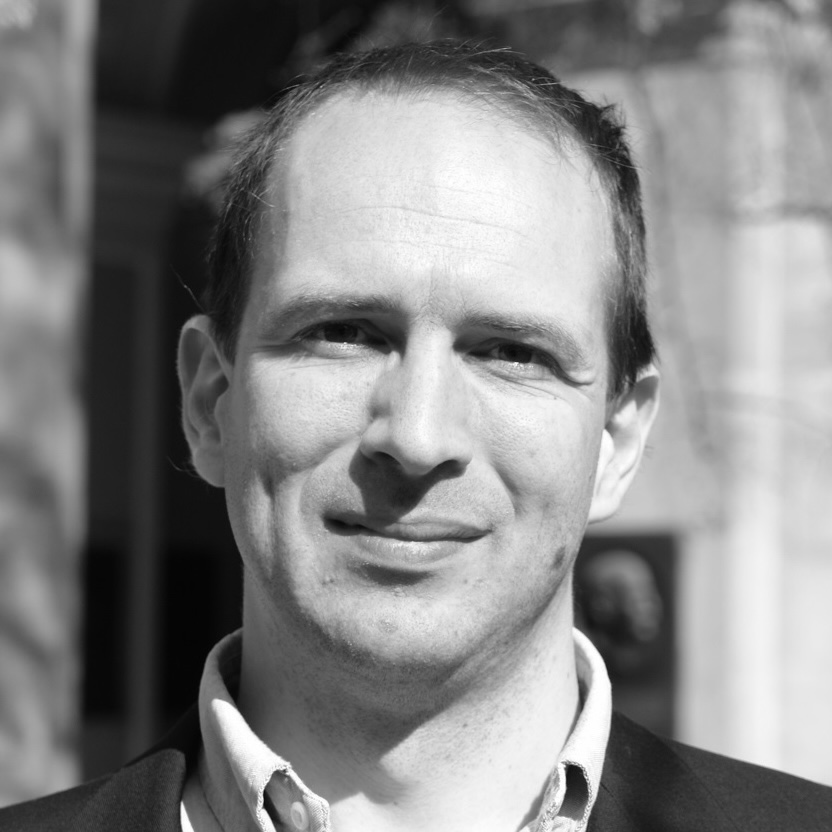
Frank Verstraete is Leigh Trapnell Professor of Quantum Physics at Cambridge University. His work on tensor network methods established entanglement as a structural principle in quantum many-body systems and transformed how strongly correlated matter is simulated and understood.